The Science of Companion Planting: Growing Better Gardens Through Plant Partnerships
Gardening is about much more than just sowing seeds into the earth and waiting for nature to take over. Successful gardens are essentially balanced ecosystems, in which the various plants grow and thrive together to support each other and improve the health and productivity of each plant...
Gardening is about much more than just sowing seeds into the earth and waiting for nature to take over. Successful gardens are essentially balanced ecosystems, in which the various plants grow and thrive together to support each other and improve the health and productivity of each plant. Companion gardening (also referred to as companion planting) is an ancient practice that has been successfully combined with modern scientific knowledge about agriculture to create healthy, productive, and low-maintenance gardens that need fewer chemicals and less maintenance.
Companion gardening is based on the principle of strategically placing different plant species near each other so that either one or both plants will be benefited by being in close proximity to one another. The benefits of companion gardening can include pest management and/or improved pollination, improved nutrition and/or improved flavor. By understanding how different plants can help each other, you can turn your garden into a self-sustaining community of plants working together to produce healthier crops and larger harvests.
The Chemical and Biological Chemistry of Plant Relationships
Plants have complex ways of communicating and interacting with their surroundings that gardeners are only now starting to learn and understand. Plants can release chemical compounds through their root systems or foliage that can protect them against damaging insects or attract beneficial insect predators to the area. In addition, some plants can produce substances that enhance the growth of adjacent plants. For example, marigold plants produce a chemical compound called alpha-terthienyl, which is toxic to several types of soil nematodes that can harm vegetables. If you plant marigolds near tomatoes, beans, and cucumbers, the marigolds serve as a biological pesticide that protects the other plants from nematode damage in the soil.
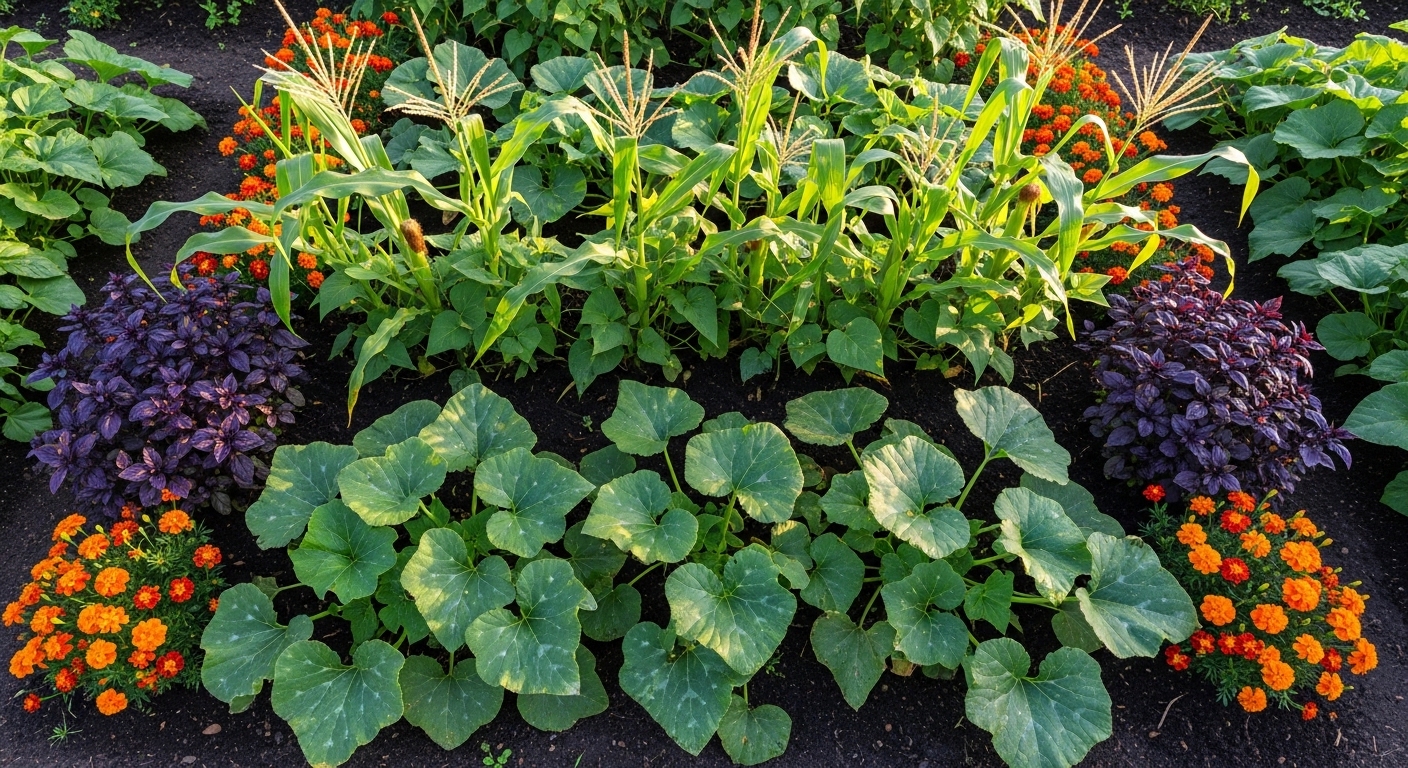
In addition to the above mentioned examples of plant communication, a prime example of the effectiveness of companion planting exists in the form of the "Three Sisters" method of planting that has been practiced by people throughout North America for thousands of years. In this method of companion planting, corn, beans, and squash are grown together. Each plant provides something that the other two need to grow. For example, the tall corn stalks of the Three Sisters provide the necessary support for the bean vines to climb upon. At the same time, the beans add nitrogen to the soil that benefits all three plants. Finally, the wide, flat leaves of the squash provide shade to the soil that helps to retain moisture in the soil and prevent weeds from growing and competing with the other plants for water and nutrients. Together, these three plants yield a greater harvest than if they were grown separately.
Strategic Use of Companion Gardening for Pest Control
Companion gardening is perhaps one of the most practical uses of companion gardening. Many gardeners rely on companion gardening rather than chemical pesticides as a way to naturally manage pests in their garden. Instead of using chemical pesticides to kill pests, gardeners can plant a combination of plants that repel the pests. Herbs such as basil, rosemary, and mint contain strong essential oils that are often unappealing to pests. For example, planting basil next to tomato plants does not only enhance the taste of the tomatoes, but also repels aphids, white flies, and horn worms.
Trap Cropping is an extension of the above strategy and involves planting sacrificial crops to distract pests away from more valuable crops. Nasturtiums are a favorite of aphids, for example. Nasturtiums can be planted at the edge of a garden bed and act as a trap crop, drawing aphids away from the more valuable vegetables. The aphid infestation can then be concentrated in a single location where it is easier to manage. Gardeners may choose to simply remove and dispose of the affected nasturtiums, thus removing the source of the infestation and preventing it from spreading.
On the other hand, there are companion plants that attract beneficial insects to your garden that will feed on the pests that are harming your garden. Flowers such as yarrow, dill, and sweet alyssum provide food for beneficial insects such as lady bugs, lace wings, and parasitic wasps. These insects are natural predators of many common garden pests such as aphids, caterpillars, and mealy bugs. Encouraging beneficial insects to live in your garden will reduce the number of pests in your garden without using chemical pesticides.
Optimizing Nutrients and Space
Companion planting involves choosing plants based upon each plant's nutritional requirements and its ability to grow into the space occupied by neighboring plants. For example, plants such as carrots and parsnips are able to take full advantage of deeper portions of the soil. Since carrots and parsnips have deeper roots than lettuce and spinach, this allows both to access different areas of the soil without competing with each other for the same nutrients. This vertical stratification allows for maximum utilization of space in smaller gardens.
Another way that companion planting offers a nutritional benefit to plants is through nitrogen fixation. Nitrogen fixing plants include peas, beans, and clover. The bacteria found in the root nodules of these plants are able to convert nitrogen in the air into a usable form for plants. Plants such as corn, cabbage, and squash are very hungry for nitrogen. When these plants are grown with legumes (plants that fix nitrogen), the legumes act as a fertilizer for the other plants. Additionally, if after harvesting the legumes, you leave the remaining roots in the soil, the roots will continue to release nitrogen back into the soil for future plantings.
Plants can also be used as "nutrient accumulators." They can draw certain minerals from deeper within the soil and then become a source of those minerals for other plants once their leaves begin to decompose. For example, comfrey has extremely deep roots that allow comfrey to gather large amounts of calcium, potassium, and phosphorus from deep within the soil. If you use the leaves of comfrey as mulch for other plants, the other plants will receive a slow release fertilizer that is high in these three essential nutrients.
Examples of Companion Planting
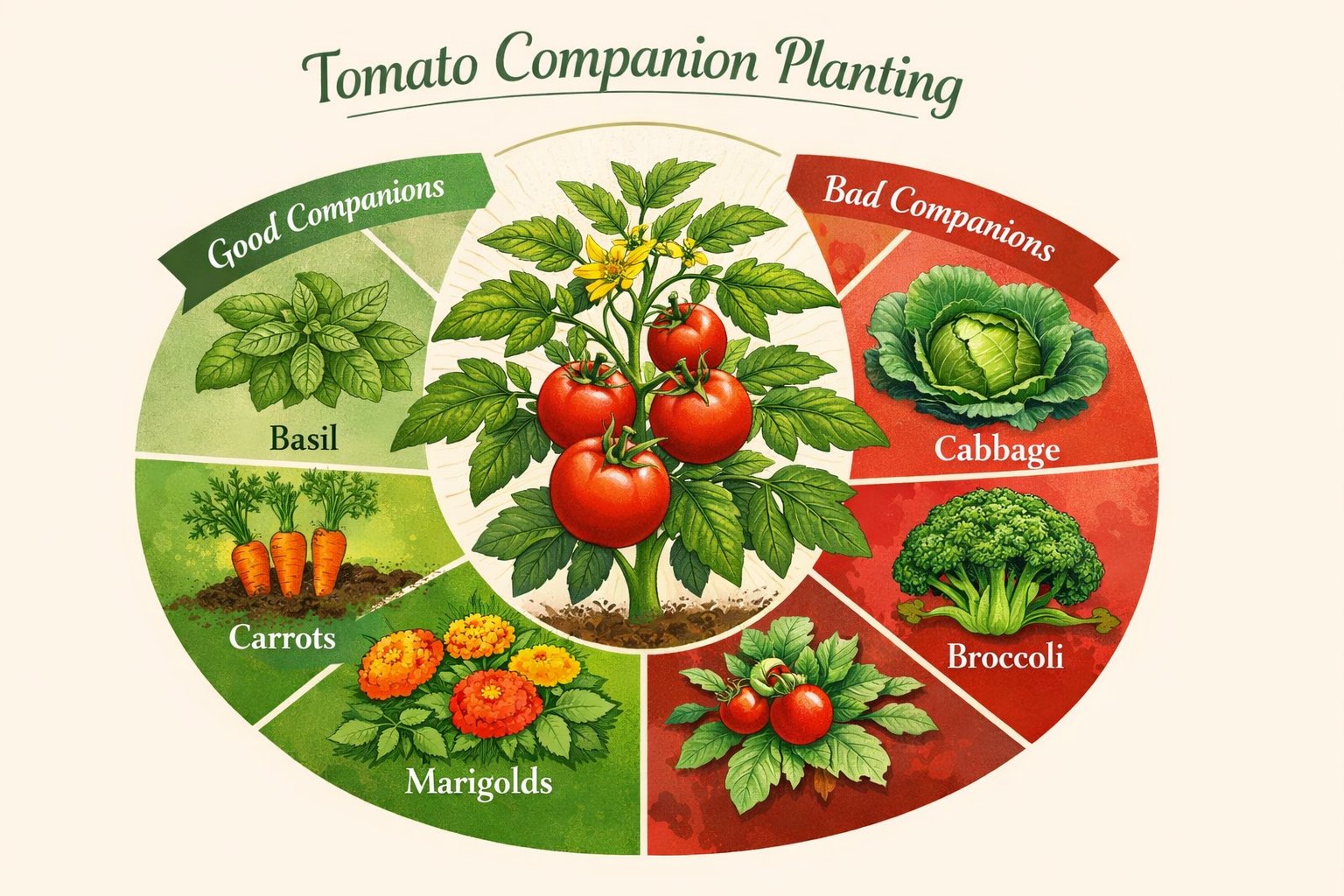
Tomatoes can be helped by basil, which will help protect tomatoes from insects and possibly improve the taste of tomatoes, as well as carrots, which will help loosen the soil and marigolds, which will help to reduce the amount of nematodes in the soil. Tomatoes and cabbage/broccoli do not do well together because they both need to obtain the same nutrients and both tend to attract the same pests.
Onions and carrots are great to grow together, since onions help keep carrot fly away from carrots and carrots help keep onion fly away from onions. Lettuce does well in the shade of larger plants during the heat of summer and therefore makes a good companion for broccoli and/or Brussels sprouts.
Radishes will help keep cucumber beetles off of cucumbers and cucumbers love to be grown with beans because beans will add nitrogen to the soil. Cucumbers and sage do not do well together because sage is a strong herb that will prevent cucumbers from growing properly.
Basil will help increase the size and flavor of peppers. Spinach will help retain moisture in the soil and can be used as a ground cover for pepper plants. Garlic and onions are two examples of herbs/plant that will help keep aphids away from peppers.
Using Companion Planting in Your Garden
It is just as important to know which plants do not get along as it is to know which ones do. Allelopathy is a process in which a plant releases chemicals into the soil that will inhibit the growth of other plants. One common example of allelopathy is black walnut trees. Black walnut trees contain a chemical called juglone that is toxic to many types of vegetables including tomatoes and peppers. Therefore, it would be wise to plant these vegetables at least 50 feet away from any black walnut tree.
Many people find fennel to be the worst offender when it comes to causing problems for other plants. Fennel has been shown to inhibit the growth of many varieties of vegetables including beans, tomatoes, and many others. Therefore, it would be wise to grow fennel by itself or at the edge of your garden. Onion family members can cause stunted growth in beans and peas. Therefore, it is best to plant these families in separate rows.
Implementing Companion Planting in Your Garden
You don't have to completely revamp your garden in order to implement companion planting. Simply choose a few of the successful pairings mentioned above and try using them in your current garden design. Try placing marigold plants at the end of rows of vegetables, place basil plants among your tomato plants, and try interplanting lettuce between your broccoli plants.
Take detailed notes about which plants you are trying to grow together and how well they perform. Each garden has its own set of conditions, and even though some combinations of plants may work well for someone else, they may not work well for you due to differences in climate, soil type, and pest pressure. Over time, you will develop a knowledge base of which combinations work best for your specific garden.
Try succession planting in addition to companion planting. Succession planting means that you will plant different groups of vegetables in succession. For example, you might plant lettuce and peas in the early spring. Once these plants have finished producing, you can remove them and plant a group of warm-season vegetables that would be perfect to be grown in the summer months with your legumes. For example, you could plant beans and squash. This method will give you a constant supply of fresh vegetables all year long, while still allowing you to maintain the positive benefits of companion planting.
Companion planting is a new way to think about gardening that encourages you to work with nature instead of fighting it. By learning and taking advantage of the natural relationships between plants, you can create a more stable and productive garden that requires less input from outside and brings you greater satisfaction. Regardless of whether you are growing a few containers of vegetables on your city balcony or a large field of vegetables on your farm, these tried-and-true principles can help you to grow healthier and more abundant vegetables while promoting a more environmentally friendly way of growing food.
For more companion planting guides, seasonal tips, and expert gardening advice, visit AznuGrow.
Need Professional Help?
Our expert team can help you with landscape design, garden maintenance, and all your gardening needs.