Off-Season Vegetables in Punjab: A Growing Revolution
The primary technology used to facilitate off-season vegetable production in Punjab is tunnel farming, including high tunnel and green tunnel farming. High and green tunnel structures create controlled microclimate conditions that protect crops from extreme temperatures and regulate moisture.....
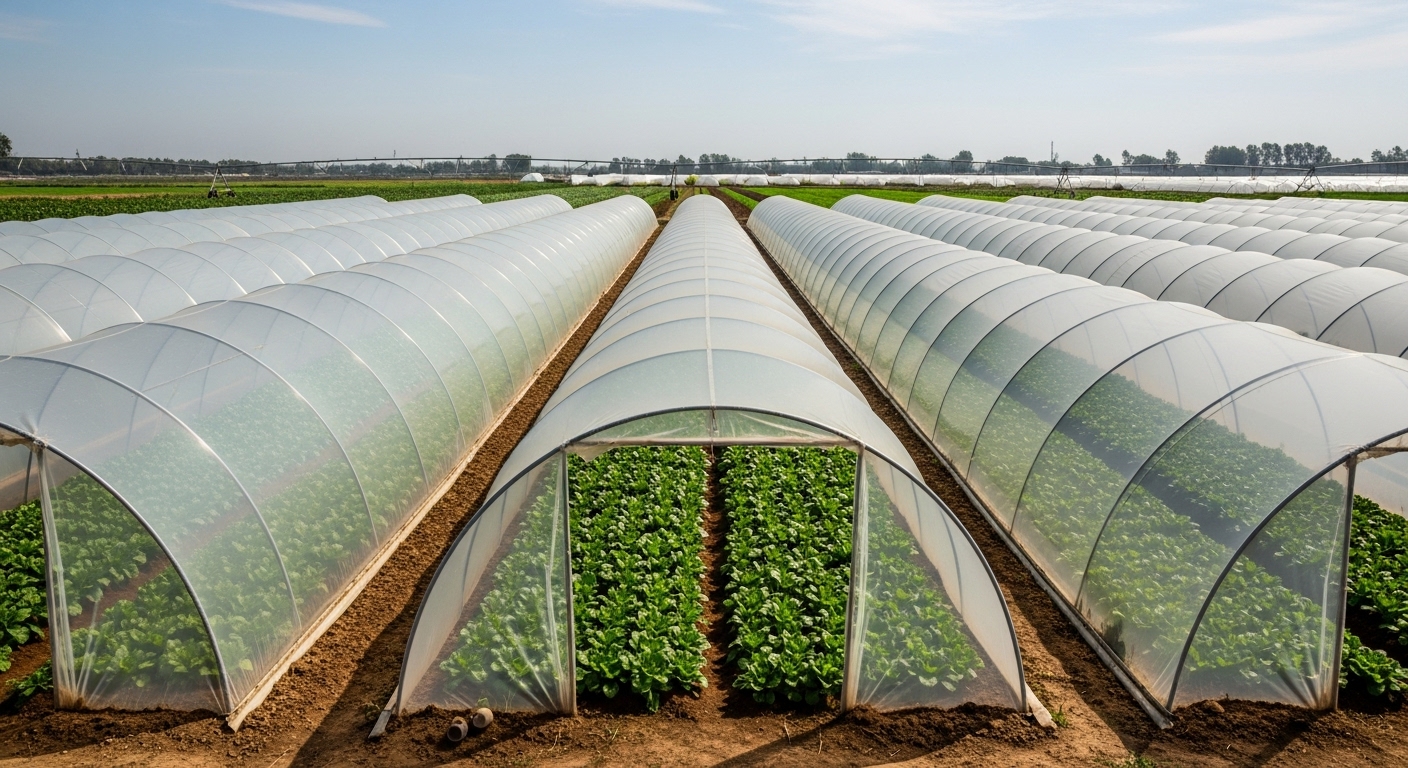
The major change in the way vegetables are produced in Punjab’s agricultural region, is the adoption of off-season cultivation techniques. There is an ongoing need to produce vegetables year round in order to meet the increasing consumer demands, as well as the increasing number of natural climate disasters. The use of modern off-season cultivation techniques allows farmers to cultivate crops outside of the normal time frames and to receive premiums on their products, while at the same time providing consumers with access to fresh vegetables.
Off-Season Vegetable Cultivation
Off-season vegetable crops are those that are grown and harvested in seasons other than when they would normally be grown in conventional field conditions. In Punjab, off-season crops include those that are grown in the winter season that are usually grown in the summer, and vice versa. Due to the low amount of off-season produce available in the market, there is a great deal of economic incentive to grow off-season produce. Off-season produce is sold for significantly higher prices in the market than produce grown during its normal season.
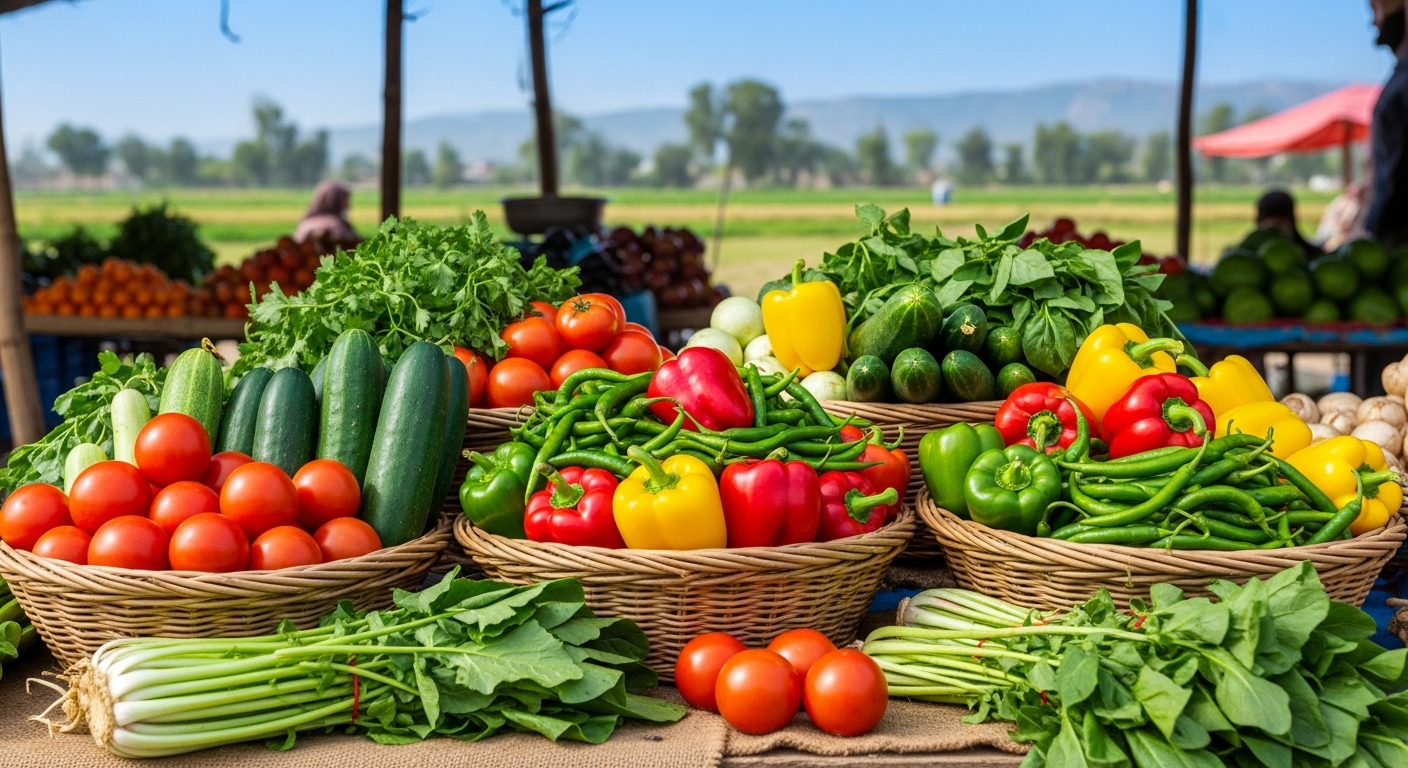
There are two main growing seasons in Punjab for vegetables, although there are some variations depending upon weather and temperature. The two main growing seasons are referred to as the "winter" season and the "summer" season. In the winter season (September-October to February-March), common vegetables such as cabbage, cauliflower, broccoli, carrots, potatoes, onions, radishes, turnips, peas, spinach, and garlic are sown and harvested. In the summer season (February-March to September-October), popular vegetables such as tomatoes, peppers, eggplant, cucumber, okra, gourds, and melons are sown and harvested. Although off-season vegetable cultivation does not follow the traditional growing seasons, it does offer many new opportunities for resourceful farmers.
Tunnel Farming Revolution
The primary technology used to facilitate off-season vegetable production in Punjab is tunnel farming, including high tunnel and green tunnel farming. High and green tunnel structures create controlled microclimate conditions that protect crops from extreme temperatures and regulate moisture levels that are necessary for plant growth.
In Punjab, a typical tunnel structure will measure approximately 200 feet in length, 10 feet in height, and 30-32 feet in width. Bamboo poles measuring between 2-3 inches in diameter will be used to construct the tunnel. Plastic sheets that are 0.10mm thick will be stretched over the bamboo frame to protect crops from the elements. The construction of a tunnel structure allows the farmer to control the environment in which the crops are grown, allowing the farmer to grow crops year round. The cost of constructing a complete tunnel farm will range between PKR 1.2 to 1.5 million, not including land costs. Therefore, the initial cost of constructing a tunnel farm may seem expensive, however, the revenue generated by the tunnel farm could make the investment worthwhile.
Balochistan recently constructed 396 green tunnels specifically for the purpose of off-season crop production. Governmental funding of the construction of green tunnels demonstrates the governmental support for this technology. The construction of these tunnels also represents an example of how governmental initiatives can expand growing seasons and ensure stable food supplies across Punjab.
Mian Shaukat, the current head of the Punjab Agricultural Marketing Company, has practiced tunnel farming for over a decade and operates tunnel farms that cover 350 acres of land. His years of experience growing crops in tunnel farms has provided him with valuable knowledge and insight into the challenges faced by farmers who are transitioning to tunnel farming. He states that farmers generally achieve about 60% of the maximum possible yield in the first year of operation as the soil is adjusting to the new tunnel farming techniques, with maximum possible yields achieved by the end of the third year.
Cultivation Techniques and Crop Selection
Successful off-season vegetable farming requires careful planning and appropriate cultivation techniques. In order to grow crops continuously throughout the year, farmers are required to plan ahead. For instance, seedlings for spring planting must be prepared during the winter months by covering them with plastic sheeting. Similarly, preparation for fall planting must take place during the summer months using shaded structures to protect the seedlings from excessive heat.
Some of the most commonly cultivated crops in Punjab tunnel farms include tomatoes, sweet peppers, and cucumbers. In a one-acre tunnel farm, approximately 10,000 tomato plants, 15,000 sweet pepper plants, and 15,000 cucumber plants are planted annually. It is estimated that each one-acre tunnel farm produces approximately 50 tons of tomatoes, 20 tons of sweet peppers, and 45 tons of cucumbers. The high level of productivity associated with controlled-environment agriculture clearly demonstrates the potential of tunnel farming in meeting the needs of the growing population in Punjab.
To maximize productivity and prevent disease, agricultural experts recommend maintaining soil pH levels between 7.0 and 7.5 and total dissolved solids not exceeding 600. Generally, the underground water in the majority of Punjab regions is sufficient for tunnel farming; however, farmers are urged to confirm the suitability of their water source prior to initiating tunnel farming operations. To ensure maximum yields and disease resistance, quality hybrid seeds from reliable suppliers are essential.
Government Support and Infrastructure Development
The federal budget for the 2025-26 fiscal year reflects a significant increase in the governmental commitment to agricultural innovation. Specifically, the ceiling on agricultural loans has been raised to PKR 2,066 billion (approximately USD 7.4 billion) and 30% of the development funds allocated will be directed towards climate-related projects. Additionally, the government has created a collateral-free micro-loan program that provides PKR 100,000 (approximately USD 360) to individual farmers. This loan program is intended to assist smaller-scale producers in adopting new technologies, including tunnel farming.
Since 2023, the citrus belt in Punjab has established drip irrigation systems on 100,000 acres of land. The establishment of these systems was made possible by 60% government subsidies, resulting in a 30% increase in citrus yields and a 40% reduction in water usage. Similar subsidies and water-saving benefits are expected to be realized by farmers utilizing tunnel farming. Efficient water management is essential for successful tunnel farming.
Tunnel farming is another initiative that is being advanced via China's technology transfer programs. A Memorandum of Understanding (MoU) was signed in January 2024 by Tianjin Modern Vocational Technology College and the MNS University of Agriculture, Multan; this MoU is to facilitate the transfer of technology to enhance Punjab's agriculture sector especially in terms of controlled-environment agriculture.
Economic Incentives and Market Trends
There is considerable economic incentive to produce off-season vegetables as prices for vegetables during their off-seasons can be 2 to 3 times higher than regular market prices. Examples include okra, which normally sells for PKR 80-100 per kilo during its natural season but can fetch up to PKR 240 per kilo during off-season. Likewise, tomatoes selling at PKR 60 per kilo during the season, can reach PKR 150-200 when they are grown in the winter months using tunnel farming.
Current market trends in Punjab show that the year round availability of vegetables has created a premium price structure in the current market. The majority of the basic vegetables such as onions, potatoes and tomatoes currently available in the local market are selling between PKR 45 to 60 per kilo during their regular seasons. The off-season produce thus commands a premium price providing tunnel farmers with much higher profit margins compared to those achieved by regular season producers. Punjab's Fruits & Vegetables Market is projected to reach USD 15 billion in 2025 and to grow at a CAGR of 6% to reach USD 20.10 billion by 2030. Of the total market share in the country, Punjab holds approximately 64%, due primarily to the fertile alluvial soils found in the province, extensive cold storage capacity and well-developed road networks connecting major markets to the province.
Challenges & Opportunities
Although tunnel farming presents many opportunities, there are still several obstacles that need to be addressed. The high cost of establishing a tunnel system, estimated at over PKR 1 million, creates a barrier for most small scale farmers who do not have access to large amounts of capital, although government backed micro-loans are available to help alleviate this challenge. Due to the time needed for the soil and systems to mature, it takes three years for the tunnel to be fully productive, therefore farmers need to anticipate lower levels of return on investment in the first few years as the systems and soil adjust.
Continuous water quality testing is necessary, and adjusting the pH level of the soil can be difficult for untrained farmers. Farmers must continually monitor temperature and take corrective actions during extreme weather conditions to protect crops from heat or frost damage. Hybrid seeds and specialized pest management within controlled environments create additional operating costs.
Future of Off-Season Vegetable Production
With increasing climate unpredictability and growing demand from urban areas for fresh vegetables, off-season cultivation is no longer simply a farming method, but rather a key component of agricultural resilience and food security in Punjab. Government backing combined with advancements in technology from international collaborations and proven profitability are creating an environment in which tunnel farming can thrive. Demonstrating the scalability of the method, successful pioneers of tunnel farming in Punjab have already established 350 acre tunnel farming operations. As more farmers begin to utilize these techniques and learn from other farmers' successes, the landscape of vegetable production in Punjab will continue to evolve towards year-round, climate resilient systems, ensuring consistency of supply to consumers and sustainable livelihoods for farmers.
For future off-season vegetable farmers in Punjab, the pathway to success includes strategic planning, sufficient capitalization, ongoing education and an open-mindedness to embracing new agricultural technology. The benefits — premium market prices, lessened income volatility and contributions to local food security — make this agricultural revolution an opportunity worthy of participation.
Need Professional Help?
Our expert team can help you with landscape design, garden maintenance, and all your gardening needs.