A New Hope For the Future - Restoring Our Natural Beauty
The fertile plains of Punjab were once lush with a variety of forests and native plants. As it stands today, this agricultural powerhouse is at a dangerous crossroad when it comes to its environment.
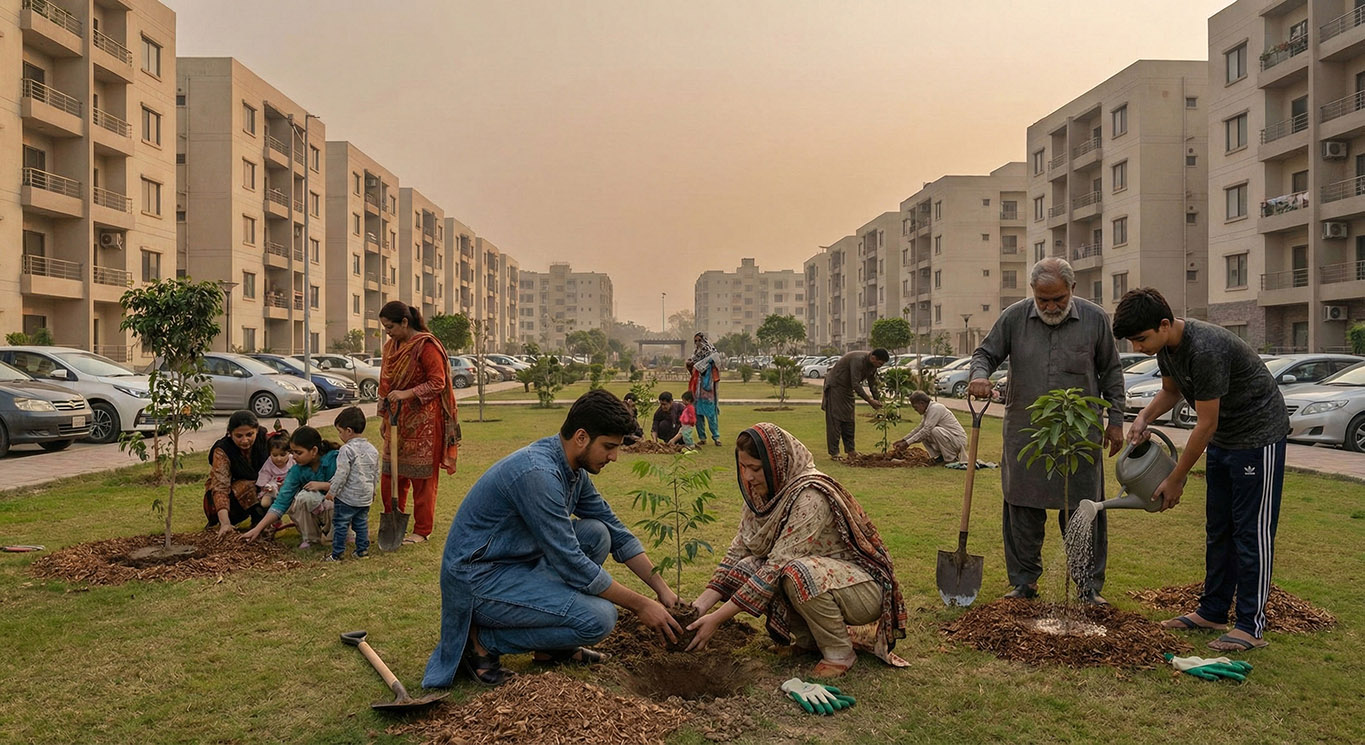
The fertile plains of Punjab were once lush with a variety of forests and native plants. As it stands today, this agricultural powerhouse is at a dangerous crossroad when it comes to its environment. Only 0.52% of Punjab is covered by forests (an ecological sustainable percentage is considered to be 25%) which is one reason why deforestation is taking place at an alarming rate, the air quality in many parts of the province is deteriorating and climate change impacts are becoming much worse. While there is a serious problem facing Punjab, there is also a historic opportunity - to use eco-friendly native plants that grow well in our soil and climate to develop new plantations.
An Environmental Reality of Punjab
While the environmental problems of Punjab are real, they are no longer simply theoretical issues; they are having a direct impact on how we live. In fact, Punjab is one of the most environmentally degraded places in the world. Cities such as Lahore experience some of the worst air pollution in the world and have experienced debilitating levels of smog that cause respiratory disease and disrupt the way people live. Burning agricultural waste, including wheat and rice after harvesting, only exacerbates the environmental disaster in Punjab. Additionally, Punjab is undergoing massive urbanization and it appears that very little of the remaining green spaces are being preserved or replaced.
In addition to pollution, Punjab is also vulnerable to extreme weather events. Between 1999 and 2018, Pakistan was ranked number five in terms of countries most impacted by extreme weather and Punjab has been particularly hard hit by erratic rainfall, drought and temperature extremes. The province is also struggling with declining groundwater tables and significant soil erosion that has reduced agricultural production by nearly 18% in recent years.
Deforestation in Punjab
Unfortunately, deforestation in Punjab is occurring at an alarming rate. Pakistan has the second-highest deforestation rate in Asia and we are losing valuable forest ecosystems due to uncontrolled urbanization, agricultural development and unproductive forestry practices. Losing trees is not just about losing trees – we are losing the natural systems that help regulate the planet's climate, clean our air and provide the basis for our water resources.
Why Native Plants Are Important
Reforestation in Punjab will be highly dependent on the types of species planted. There are many advantages to planting native species rather than non-native species. First, native species are generally preferred for reforestation projects because they are better suited for the climate and soils of Punjab and can be relied upon to thrive. Second, native trees have evolved over millions of years to adapt to the climate, soil and rainfall patterns of Punjab. Finally, they have learned to deal with pests and diseases that may exist in Punjab and therefore do not require the application of chemicals to protect the trees from these pests and diseases.
Native Trees Have Advantages Over Non-Native Trees Native trees require less irrigation than non-native trees and are ideal for Punjab where water is scarce. Native trees are also resistant to pests and diseases that exist in Punjab and therefore do not require the application of chemicals. Perhaps most importantly, native trees provide habitat for the indigenous wildlife of Punjab, including birds, insects and small animals that rely on specific native plants for food and shelter. Exotic species, on the other hand, can create "green deserts" that look beautiful but provide limited benefits to wildlife.
There are 52 different tree species found in Punjab and as such, there is a wide variety of options for restoring our forests. Not only do these species offer the potential for restoration but they are also culturally important. Many of the trees native to Punjab appear in local stories, medicines and religious practices that link people to their natural heritage.
Native Tree Species in Punjab
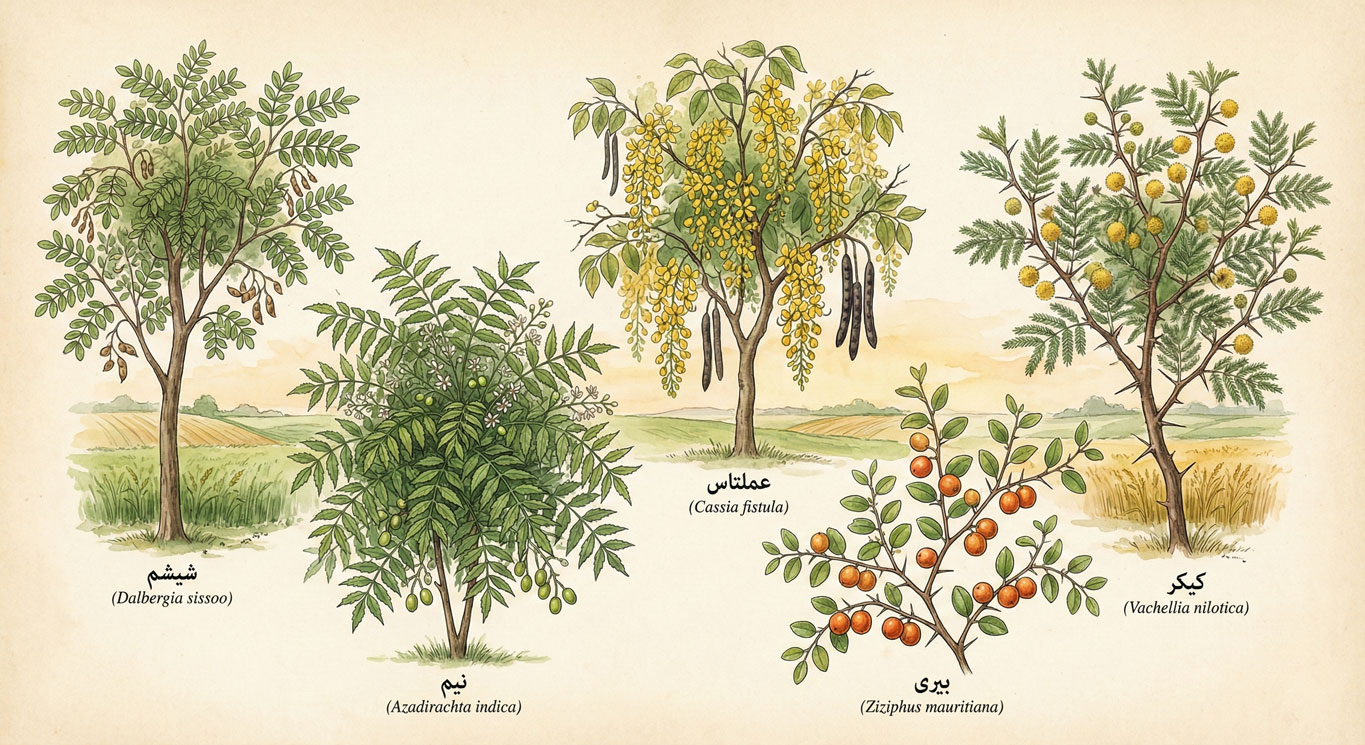
Shisham (Dalbergia sissoo)
Punjab's native forest champion is the Shisham tree. It is a deciduous tree which has good tolerance to alluvial soils and can thrive under both drought and flooding conditions. The height of the Shisham tree can reach up to 25 meters. It gives very good quality wood which is very much in demand for furniture and construction material. It also gives a lot of shade during the hot summer days. Due to nitrogen fixing ability of this tree it increases fertility of the land and therefore it is very useful for the degraded land. Traditionally farmers plant shisham on the boundary of fields. The natural windbreak created by the branches of shisham protects the crops from strong winds. At the same time the trees give the supplementary income to the farmers through the sale of timber.
Kikar (Acacia nilotica)
There is no tree that embodies more of the spirit of resilience than Kikar. It is able to survive in Punjab's extreme conditions such as drought, poor soil, high temperatures etc. and hence it is the best suited to the areas where the growth of other species is not possible. Kikar grows into a tree of height ranging from 15-20 meters and the flowers produced by it are fragrant and yellow. They provide food for bees in addition to producing nectar. The pods produced by the tree serve as a fodder for animals. The deep rooted nature of the tree prevents erosion of the soil and helps in recharging of ground water. The wood of the tree is used for various purposes including agricultural tools, fuel, and the bark and pods of the tree have been used for medicinal purposes for centuries.
Neem (Azadirachta indica)
Neem is known as the village pharmacy due to its many ecological and health benefits. The neem tree grows into a tree of height of 20 meters and the dense foliage creates a cooling canopy over the area. The tree has the ability to remove pollutants from the air more efficiently than most species, thus helping to clean the polluted air of urban Punjab. The leaves, bark, and seeds of the neem tree contain compounds which have been used in traditional medicines for treating a variety of ailments ranging from skin disorders to digestive problems. The neem tree is highly valued by farmers due to its use as a natural pesticide. The crushed leaves and oil of the tree can be used to protect crops from pests without the use of chemicals. The tree grows well in the climate of Punjab and does not need much water, and provides greenery throughout the year.
Banyan (Ficus benghalensis)
A Banyan is more than just a tree; it is a living ecosystem. It starts its life as a small tree but then begins to develop aerial roots which descend from its branches and eventually form additional trunks and create a sprawling canopy of hundreds of square meters. A single mature banyan tree can provide shade for an entire community gathering place. Banyan trees support a wide range of biodiversity, providing habitat for numerous bird species, insects, and small mammals. Banyan trees hold cultural and social importance in the local tradition. Banyan trees are commonly planted near places of worship and community buildings and become a landmark that can last for generations.
Peepal (Ficus religiosa)
The Peepal tree is sacred across South Asia and is considered to have environmental benefits in addition to its spiritual values. This large deciduous tree has heart shaped leaves and is unusual among trees because it continues to perform photosynthesis at night. Therefore, it is one of the most efficient oxygen producers in the world. The Peepal tree grows quickly and is able to tolerate high levels of urban pollution and requires little maintenance once established. The large root system of the Peepal tree prevents erosion of the soil in riverine areas and slopes. The Peepal tree is also a source of food for a number of bird species, especially those that eat the small figs that grow on the tree. Traditionally communities plant Peepal near temples, schools, and community meeting areas where the tree's shade and cooling properties will be beneficial to everyone.
Beri (Ziziphus mauritiana)
The Indian Jujube or Beri is a unique example of a tree that is both an ecological asset and an economic asset. This drought resistant tree produces nutritious fruits which are high in Vitamin C, providing food security for people in water scarce areas. The Beri tree is able to survive in extreme temperatures found in Punjab (from extremely cold winters to extremely hot summers), and it is able to thrive in poor soils that do not favor the growth of other species. The thorns of the tree act as a natural fence for agricultural lands, and the leaves of the tree produce a nutritious fodder for livestock. Due to its smaller size (8-12 meters), the Beri tree is suitable for planting in home gardens and community spaces, where larger trees may not be practical.
Jaman (Syzygium cumini)
The Blackberry Tree or Jaman is a tree that offers both delicious fruit and ecological benefits. The evergreen tree reaches a height of 20-25 meters and produces purple-black berries that are eaten by both humans and wildlife in the summer months. The Jaman tree thrives in the fertile soils of Punjab, particularly in areas where there is a slight increase in moisture. The tree's dense canopy provides excellent shading, and the flowers produced by the tree attract pollinators that are essential for agricultural productivity. The fruit of the Jaman tree contains compounds that are valued in traditional medicine for the management of blood sugar levels. The Jaman tree is suitable for planting in roadside plantations, parks and as part of agricultural boundaries, where the tree's multiple benefits can be maximized.
Amaltas (Cassia fistula)
During the later spring season the Golden Shower Tree changes the face of Punjab's landscape when it produces its spectacular displays of bright yellow flowers. In addition to its ornamental value, the Golden Shower Tree has a number of ecological uses. The tree grows to a height of 10-20 meters and is able to survive in drought conditions and thrive in degraded soils, which make it useful for restoration activities. The pods of the tree have medicinal properties which are used in traditional remedies. The Golden Shower Tree provides a moderate level of shading for plants growing beneath it, allowing them to receive sufficient amounts of sunlight to maintain their own ecosystems. The attractive appearance of the Golden Shower Tree makes it an ideal candidate for planting in urban areas, parks, and along roadsides, where it will enhance the community's environment and uplift the community's morale.
Practical Steps to Successfully Establish a Native Plantation
Selecting Site and Preparing the Land
Understanding your land is an important part of developing a plan. Before you select the species you want to grow, assess your land's soil type, its drainage characteristics and sunlight. The soils of Punjab range from productive alluvial plains to degraded areas that will require different approaches. Remove invasive plants and other debris from the area but keep the existing native vegetation since this gives you some idea of what the growing conditions are and provides immediate biodiversity.
Degraded and compacted soils are common in urban environments and significantly improving success rates can be achieved by loosening the soil and adding organic matter. In agricultural environments, consider using a contour planting approach in sloping terrain to prevent erosion and conserve water. Urban environments can benefit from having multiple species interplanted to create layered canopies providing variety in habitat opportunities and meeting community requirements for shade and aesthetic appeal.
Timing and Planting Strategies
The monsoon season in Punjab (July – September) creates optimal planting conditions as the available soil moisture permits the establishment of new plants with minimal irrigation. Planting early in the monsoon period provides the maximum amount of time for new saplings to develop root systems before going dormant in the winter. A later winter planting (February – March) strategy can also be used, although greater care should be taken regarding watering as the temperature increases.
Saplings should be planted at their original soil depth. Burying the stem too deeply may lead to decay, while planting too shallowly may expose the roots. Plant the saplings in a depression to collect rainwater and direct irrigation water to the roots. Plant the trees at a distance based upon their mature size: large trees such as banyans require 10 – 15 meters of space, while small trees such as beri can be successfully grown at 5 – 8 meters. For natural forest plantings, dense planting is recommended, while further apart spacing is recommended for use in farmland and urban environments.
Watering and Irrigation Practices
The first year of a new planting is crucial to ensuring the long term success of the new plantings. Young saplings require consistent watering — weekly during the hottest months of the year, and less frequently during the cooler months. Over-watering however, leads to root disease. Applying mulch made of leaves or straw around the base of the trees serves to retain moisture, reduce competing weeds, and add organic matter to the soil as it breaks down. Once the root system of most native species has developed sufficiently to draw upon deeper, non-seasonally variable moisture, they generally become drought tolerant in approximately 2 – 3 years.
Species selected for use in water scarce areas should have drought resistance characteristics, such as kikar and beri. Water harvesting techniques, including small berms or check dams designed to catch monsoon runoff, can assist in supporting plantations without reducing groundwater resources. Drip irrigation systems provide the highest level of efficiency for larger scale projects; however, there is a high upfront cost involved.
Protecting and Maintaining New Plantings
New plantings need to be protected from grazing animals — simple wire cages or thorn fences work well. In agricultural areas, inform farmers of the long-term benefits of trees and encourage them to protect new saplings instead of removing them. Weeds compete with young trees for water and nutrients until the trees reach a stage of development where their canopy shades out the surrounding environment and reduces weed growth through shading.
Prune to shape the growth of the tree and to remove dead branches, but prune minimally to avoid stressing the tree. While many native species require little maintenance, monitor for pests and diseases as native species rarely experience significant pest and disease problems. If either does occur, choose a natural solution (such as neem-based treatment) to address the issue as opposed to using synthetic chemical pesticides.
Building Community Support and Ownership: Essential to Success
One of the key elements of the most successful plantation initiatives is community involvement/ownership. Plants initiated by individuals outside of the community often fail while those initiated by members of the community tend to thrive. Involve members of the local community in selecting the species and designing the layout of the site. Local knowledge of growing conditions is invaluable.
Organize community planting events on weekends or public holidays to celebrate the event rather than treat it as a chore. Schools represent a great opportunity — students who participate in planting and caring for trees gain an appreciation for the environment and are able to contribute to the creation of long-term green spaces. Many religious organizations traditionally participate in tree planting as a way to perform spiritual acts, especially for species like the peepal and neem mentioned in sacred texts.
Connect the benefits of plantings to tangible community benefits. Fruit bearing species, such as jaman and beri, provide food. Shade trees create pleasant spaces for families to gather. Medicinal and economic benefits come from neem and kikar. When communities directly benefit from the existence of plantations, they will protect and maintain them. Cooperative management models can be effective where communities collectively own and manage areas of plantation, sharing both responsibility and benefits.
Assessing Success Beyond Measurable Quantities
While counting the number of trees planted represents progress, the ultimate measure of success lies in the changes occurring in the landscape and ecosystem as a result of the plantings. Look for returning bird populations — the presence of birds indicates that the habitat is recovering. Note cooler microclimates developing beneath maturing tree canopies. Observe changes in soil structure as tree roots penetrate compacted soils and as fallen leaf litter accumulates organic matter in the soil.
Track groundwater levels in areas of plantations — even relatively low-density forest cover contributes to recharging aquifers. Document improvements in air quality in urban plantings where trees help to filter pollutants from the air. Measure the extent to which local residents engage with the plantation area — do they visit the area? Are they planting additional trees? Are children playing in shaded areas where no such areas existed previously?
Monitoring progress over the longer-term provides insight into how plantations evolve into sustainable ecosystems. Natural regeneration — where seedlings appear without human assistance — signals that the forest is recovering naturally. Celebrate these developments as evidence that our collective effort is contributing to the restoration of the natural environment.
Punjab's Green Future
Native plantings offer so much more than restoring environmental damage – they represent the potential to reclaim our ecological legacy and build the capacity for climate resiliency for generations to come. Every tree that is planted offers cleaner air, lower temperatures, protected water sources, increased biodiversity, and so much more. Millions of native plants could lead to a total transformation in the environmental trajectory of Punjab.
While the challenges appear daunting (low forest cover, competition for land, lack of water, pollution), solutions begin very simply with one tree, in well-draining soil. Throughout Punjab communities have shown examples of what is possible. Trees in school yards not only provide shade for children at play, but also teach students how to protect the environment. Trees along agricultural boundaries generate income from timber sales while providing protection to crops. Parks in urban areas with native vegetation serve as "green lungs" for cities.
While government programs provide some structure and support for this initiative, it is community based actions that will create meaningful changes. Whether you have a few square feet of yard space, several acres of farmland, or the time to assist community-based reforestation efforts, you can contribute to Punjab's reforestation effort. Simply choose the native species best suited for your location; plant responsibly and take care of the seedlings regularly; protect them with great vigilance; and share your knowledge with your neighbors.
The trees that are planted today will be providing shelter for our grandchildren tomorrow. They will be cleaning the air for the generations that follow us. They will provide habitat for wildlife that we may never see, but their presence adds richness to our collective environment. With the act of planting native trees we do not merely add foliage to an otherwise barren landscape – we are restoring ecological balance, we are honoring our natural heritage, and we are investing in the long-term sustainability of Punjab.
Punjab was once a much greener place than it is today – and it can be again. The first step towards this transformation is to understand which types of trees are native to this region, to plant those correctly, and to protect them for years to come. The native trees of Punjab have been here, have grown here, and have evolved here. When we grow these trees we are growing hope – rooted firmly in the earth, developing slowly over time, and stretching out across the beautiful and rich land that we all love.
Need Professional Help?
Our expert team can help you with landscape design, garden maintenance, and all your gardening needs.